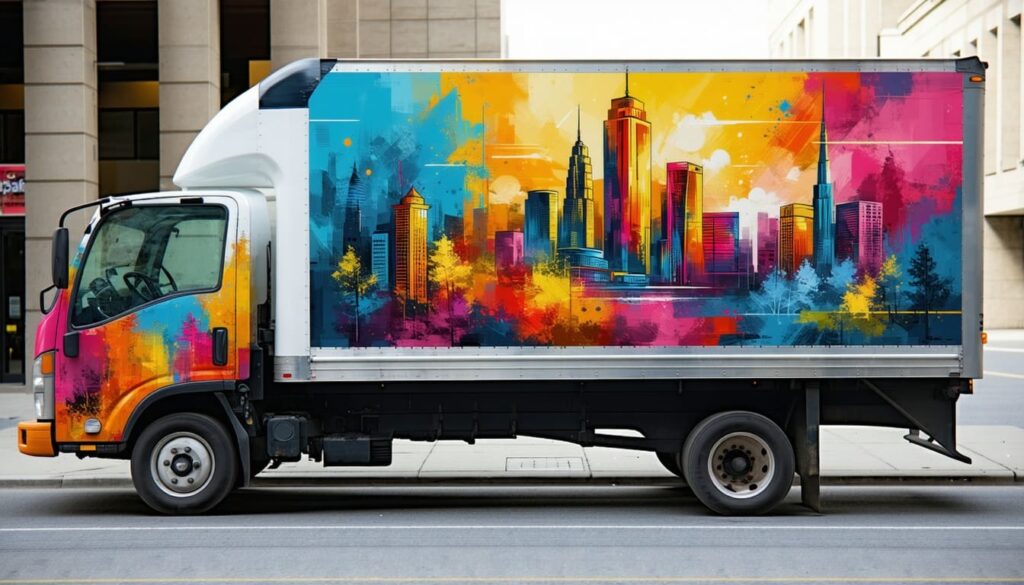
Why Truck Wraps Matter?
More than 46,000 wrapped vehicles were on U.S. roads in 2017, reaching potential audiences of millions every day.
Good news: mobile advertising, like custom truck wrap designs, delivers high recall and long-term value. With the right style, your truck becomes a moving showroom, shielding paint and boosting brand recognition around the clock.
A well-crafted wrap does more than look stunning. It builds trust (people remember branded vehicles up to 15% more than plain ones), protects your investment, and can pay for itself in new leads. You’re about to explore everything you need to make your next wrap unforgettable.
Core Design Principles
When you’re planning your truck’s new look, follow these four basics to keep your message clear and impactful.
Keep Design Simple
Busy graphics can overwhelm viewers, especially at highway speeds. Limit text to essential details—your logo, tagline, and a clear call to action. Use large, legible fonts (think sans serif or simple serif styles) so drivers can read your message at a glance. For extra inspiration, explore our custom vinyl wrap patterns.
Integrate Your Branding
Your wrap should feel like an extension of your existing marketing (website, business cards, signage). A 2022 study of fleet branding found that consistent visuals across touchpoints boost brand trust by 20%. Use your company’s color palette and tone of voice to reinforce recognition every time your truck rolls by.
Choose High Contrast Colors
High-contrast schemes—dark text on light backgrounds or vice versa—ensure readability from a distance. A bold color swap like bright yellow text on a black base can catch eyes at intersections. Just remember that neon or pastel shades may lose impact under street lights or in poor weather.
Pick Readable Typography
Aim for letter heights of at least 3 inches on large trucks and 2 inches on smaller models. Avoid script or decorative fonts (they look neat parked, but blur in motion). If you want a bit of flair, pair a clean headline font with a simpler body font to maintain clarity.
Popular Finishes And Materials
Your design’s finish can change the entire feel of the wrap. Here’s a quick overview of common options:
| Finish Type | Appearance | Ideal Use |
| Glossy | Shiny, like fresh paint | Consumer vehicles, high-end retail branding |
| Matte | Flat, non-reflective | Modern or luxury brands, minimalistic designs |
| Satin | Low sheen, subtle glow | Balanced look, hides minor surface imperfections |
| Chrome | Highly reflective, mirror-like | Show-stopping promos, auto shows |
| Color-Changing (Pearlescent) | Shifts color with angle and light | Event vehicles, specialty marketing fleets |
| Clear Protective Film | Transparent, guards original paint | Preserving factory finish, adding decals |
Chrome And Color-Changing Wraps
For a bold statement, chrome or pearlescent wraps can’t be beat. They demand attention at events or on city streets. Keep in mind these finishes cost 20–30% more and require expert installers to avoid surface blemishes.
Protective Clear Films
Clear vinyl or PPF (Paint Protection Film) acts like a second skin, blocking UV damage, scratches, and road debris. While mostly invisible, you can layer text or graphics on top to advertise without hiding your factory paint. To see more ways to blend protection with branding, check out our custom car wrap designs.
Select The Right Design
Not every style suits every business or vehicle. Here’s a guide to making sure your wrap design supports and reflects your goals effectively.
Match Your Brand Voice
Are you fun and playful, or premium and professional? Your wrap’s imagery and copy should echo your company’s personality. Browse unique vehicle wrap ideas for styles that fit your vibe.
Factor In Vehicle Type
A long-bed semi-truck offers vast real estate—perfect for detailed scenes or large logos—while compact pickups need succinct messages. If you run a fleet, our custom semi-truck wrap concepts guide can help you optimize each model.
Plan Your Wrap Project
A smooth wrap rollout hinges on preparation. Use this checklist before you order materials or book an installer:
- Define Your Objectives
- Brand awareness, event promotion, paint protection, or all three
- Target audience and geographic routes
- Prepare High-Resolution Assets
- Vector logos, high-res photos, approved color codes
- Clear style guide or mood board
- Work With Professionals
- Look for installers with a solid portfolio and three or more years of experience
- Ask for references and warranty details (good installers offer 3–5-year warranties)
- For custom illustration or logo tweaks, partner with a specialist in bespoke car wrap graphics
- Review Mockups And Proofs
- Confirm logo placement, color accuracy, and text size
- Check how designs wrap around curves, handles, and bumpers
- Schedule Installation And Maintenance
- Plan for a clean, climate-controlled install (no dirt or rain)
- Ask about recommended cleaning products to extend lifespan
Good news, with this roadmap, you’ll avoid common pitfalls (like misaligned seams or fugitive inks).
Understanding Cost And Value
Vehicle wraps range in price, but they’re often more cost-effective than you think. Here’s a snapshot:
| Vehicle Type | Average Cost | Expected Lifespan |
| Compact Pickup | $3,500–$4,000 | 5–7 years |
| Full-Size Truck | $4,000–$4,800 | 5–7 years |
| Semi-Truck Trailer | $5,000–$7,000 | 5–7 years |
| Specialty Finishes | +20–30% | 3–5 years |
According to Wraps Inc., a fleet of ten wrapped trucks can generate six figures in impressions every day (30,000–70,000 views per truck). Even a single mobile billboard often outperforms static billboards in cost per impression.
Beyond marketing value, remember the protective benefit. Wrapping shields paint from chips and UV, preserving resale value and reducing repaint costs over time.
Quick Recap And Next Steps
- Keep your design simple by using bold, contrasting colors and minimizing the amount of text.
- Follow core principles: readability, brand integration, and clear messaging.
- Choose the finish that fits your vehicle and budget (glossy, matte, chrome, or protective films).
- Tailor your design to suit the specific type of truck as well as align with the brand’s unique voice and identity.
- Plan meticulously: define goals, prep assets, work with pros, and review proofs.
- Budget wisely: weigh initial costs against long-term ROI and paint protection.
Now it’s your turn. Pick one design principle, sketch a rough mockup, and reach out to a trusted installer. You’ve got this, and your truck is about to turn heads wherever it goes.